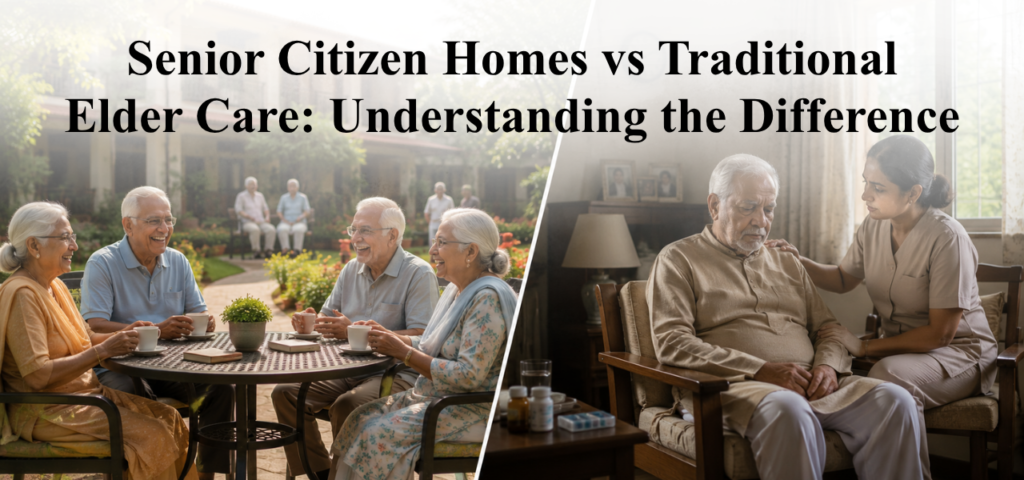
Senior Citizen Homes vs Traditional Elder Care: Understanding the Difference
Rethinking Senior Living in a Changing World
Conversations around elder care are evolving. As family structures, lifestyles, and responsibilities continue to change, more families are exploring new ways to provide support, comfort, and security for their loved ones in later stages of life.
However, there is still a common misconception that senior citizen homes and traditional elder care represent the same experience, or that choosing a senior living community means replacing family care.
In reality, both approaches serve meaningful purposes and are built around different needs. Understanding the difference helps families make informed, compassionate decisions that prioritize dignity, well-being, and quality of life.
At Anand Nilayam, we believe informed choices create better outcomes for both senior citizens and their families.
Understanding Traditional Elder Care
Traditional elder care typically refers to support provided within a family setting. Parents or elderly family members continue living at home while receiving assistance from family members, caregivers or local support systems.
This model has long been rooted in values of family connection and emotional closeness.
Traditional elder care often includes:
- Living with children or relatives
- Family-supported daily routines
- Informal caregiving arrangements
- Home-based assistance and monitoring
- Emotional familiarity and continuity
For many families, this remains a meaningful and valued approach.
However, changing lifestyles and increasing care requirements can sometimes create practical challenges over time.
Understanding Senior Citizen Homes
Modern senior citizen homes are designed to provide structured support while maintaining comfort, independence, and community living.
Today’s senior living environments focus not only on care, but also on creating meaningful experiences, social engagement, emotional well-being, and daily convenience.
Senior citizen homes generally offer:
- Comfortable residential environments
- Community-based living experiences
- Structured support and assistance
- Opportunities for social interaction
- Organized routines and activities
- Safe and accessible surroundings
The objective is not to replace family, but to create an environment that supports healthy and dignified aging.
Common Misconception: “Senior Living Means Family Separation”
One of the biggest misunderstandings surrounding senior citizen homes is the belief that moving into a senior living community means reducing family connection.
In reality, many families choose senior living because they want their loved ones to receive consistent support, companionship, and an environment designed for their evolving needs.
Senior living should not be viewed as distance from family.
Instead, it can become an extension of family support, where care, comfort, and meaningful relationships continue to grow.
Key Differences Between Senior Citizen Homes and Traditional Elder Care
| Area | Traditional Elder Care | Senior Citizen Homes |
| Living Environment | Family household | Dedicated senior living community |
| Daily Support | Family-led | Structured support system |
| Social Interaction | Limited to routine circles | Community engagement opportunities |
| Lifestyle Structure | Depends on family schedule | Organized and balanced routines |
| Independence | Varies by household | Designed to encourage independence |
| Community Experience | Family-centered | Peer connection and shared experiences |
Neither model is universally better, the right choice depends on individual needs, preferences, and family circumstances.
When Families Consider Senior Living
Every family’s journey is different, but some situations may encourage exploration of senior living options:
- Seniors seeking companionship and active living
- Families managing changing work and caregiving schedules
- Preference for structured daily routines
- Desire for a comfortable and accessible environment
- Interest in community engagement and social experiences
The goal is not to move away from family values, it is to create an environment where support becomes sustainable.
The Modern Approach: Combining Care with Quality of Life
Senior living has evolved significantly.
Today’s approach focuses on helping individuals continue living with confidence, connection, and purpose, not simply receiving assistance.
Meaningful senior communities emphasize:
Comfort
Creating spaces that feel welcoming and familiar.
Community
Encouraging relationships and social engagement.
Respect
Supporting individuality and personal choices.
Well-Being
Promoting physical, emotional, and everyday quality of life.
The Anand Nilayam Approach
At Anand Nilayam, we believe senior living should preserve dignity while creating
opportunities for connection, comfort, and meaningful experiences.
Our philosophy is built around:
- Respectful and supportive environments
- Community-centered living
- Comfortable daily experiences
- Encouraging independence
- Emotional well-being and belonging
We believe senior living should feel like a place where life continues to be fulfilling, not a transition away from what matters.
Final Thoughts
Choosing between traditional elder care and senior citizen living is not about selecting one value over another.
It is about understanding what creates the best environment for comfort, support, and quality of life.
Families today are making more thoughtful and informed decisions about aging, and that shift reflects care, responsibility, and long-term well-being.
The future of senior care lies in creating environments where every individual feels respected, connected, and empowered to live with dignity.
Frequently Asked Questions (FAQ)
Q. Are senior citizen homes the same as traditional elder care?
No. Traditional elder care is usually family-led at home, while senior citizen homes provide structured community-based living and support.
Q. Does choosing senior living reduce family involvement?
Not necessarily. Many families remain actively involved while creating additional support for their loved ones.
Q. Who can benefit from senior living communities?
Senior living may support individuals seeking comfort, social connection, structured routines, and community experiences.
Q. What is the purpose of modern senior citizen homes?
To provide safe, respectful, and fulfilling environments that support quality of life.
Want to understand how modern senior living can support comfort, dignity, and meaningful living?
Connect with Anand Nilayam to learn more about our vision for creating supportive spaces designed around the evolving needs of senior citizens.
Anand Nilayam, A Community Built with Care, Respect, and Belonging.